Trademark Registration for E-Commerce Businesses in Malaysia

Updated: Jan 15
Trademark registration plays a critical role in protecting e-commerce businesses in Malaysia. As online selling grows rapidly on platforms such as Shopee, Lazada, and TikTok Shop, brand disputes also increase. Therefore, every serious online seller must secure trademark registration early to protect brand ownership, avoid legal conflicts, and support long-term growth.
This guide explains how trademark registration works in Malaysia, why e-commerce sellers need it, and how to register correctly with MyIPO.
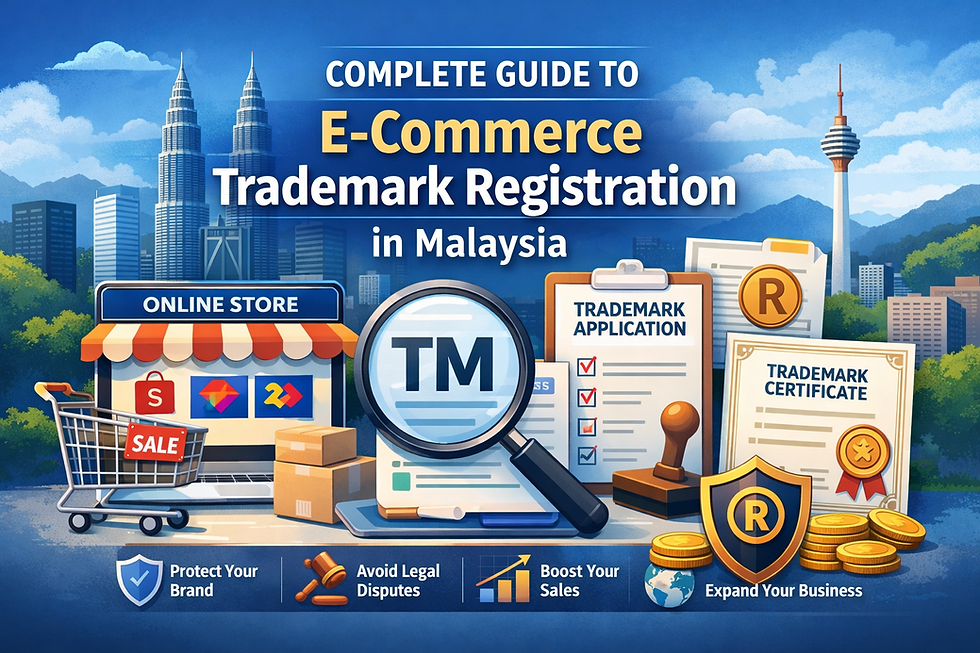
Why Trademark Registration Matters for E-Commerce Sellers
First, trademark registration gives you legal ownership of your brand in Malaysia. Without registration, competitors can copy or even register your brand name before you do. As a result, many sellers lose their listings, packaging, and customer trust.
Moreover, trademark registration allows you to enforce your rights on e-commerce platforms. Shopee and Lazada prioritize trademark owners when handling infringement complaints. Consequently, registered brands receive faster takedowns and stronger platform protection.
In addition, trademark registration increases buyer confidence. Customers trust brands that show professionalism and legitimacy. Therefore, registered trademarks directly support higher conversion rates and repeat purchases.
What E-Commerce Brands Can Register as a Trademark
Trademark registration in Malaysia covers several brand elements, including:
Brand names (word marks)
Logos and symbols
Combined word and logo marks
Product names
Marketing slogans
However, distinctive names perform better during examination. Generic or descriptive names often face rejection. Therefore, brand strategy matters before filing.
Trademark Registration Classes for Online Businesses
Malaysia follows the Nice Classification system. Each trademark registration protects specific goods or services. E-commerce sellers must choose classes carefully.
Common classes include:
Class | Use Case |
Class 3 | Cosmetics, skincare, personal care |
Class 9 | Electronics, software, digital goods |
Class 25 | Clothing, footwear, fashion |
Class 30 | Food, beverages, snacks |
Class 35 | Online retail and e-commerce services |
Because incorrect class selection limits protection, professional advice improves success rates.
Learn more about class selection here:
Trademark Classes in Malaysia PatentMaster.com.my
Step-by-Step Trademark Registration Process in Malaysia
Step 1: Conduct a Trademark Search
Before trademark registration, you must check availability. A proper trademark search identifies similar names, logos, or pronunciations that may cause rejection.
You can search directly through MyIPO, but professional searches provide deeper risk analysis.
MyIPO Official Trademark Portal
Step 2: File the Trademark Application
Next, you submit the trademark registration application to MyIPO. You must include:
Trademark image or wording
Owner details
Selected class(es)
Government filing fees
You may file as a word mark, logo mark, or combined mark. However, word marks usually provide broader protection.
Step 3: Examination by MyIPO
After submission, MyIPO examines the trademark. Officers review distinctiveness, similarity, and legal compliance. If issues arise, you must respond within strict deadlines. Therefore, accuracy during filing prevents delays.
Step 4: Publication and Opposition
Once MyIPO accepts the trademark, the office publishes it for two months. During this period, third parties may oppose the registration.
If no opposition appears, the application moves forward automatically.
Step 5: Trademark Registration Certificate
Finally, MyIPO issues the trademark registration certificate. The trademark remains valid for ten years and allows unlimited renewals.
How Long Does Trademark Registration Take in Malaysia?
Trademark registration usually takes 12 to 18 months. However, clean filings move faster. Objections, opposition, or incorrect classes often cause delays.
Therefore, early filing reduces risk and improves business continuity.
Common Trademark Registration Mistakes by
E-Commerce Sellers
Many online sellers repeat the same errors:
They delay trademark registration
They skip trademark searches
They choose incorrect classes
They use descriptive brand names
They assume business registration equals trademark ownership
Because these mistakes cause brand loss, proactive registration protects future revenue.
Real E-Commerce Trademark Scenarios
Shopee Brand Dispute Case
A fashion seller failed to register a trademark. A competitor registered a similar name and filed a platform complaint. Shopee suspended listings immediately. The seller lost sales and brand credibility.
Growth Success Case
A registered food brand licensed its trademark to retailers. The business expanded offline and increased annual revenue by over 30%.
Why Choose PatentMaster.com.my for Trademark Registration
PatentMaster.com.my helps e-commerce sellers secure trademark registration correctly and efficiently. Our team understands MyIPO procedures and platform-specific enforcement requirements.
We provide:
Comprehensive trademark searches
Accurate class selection
Objection handling support
End-to-end trademark registration services
👉Trademark Registration Services in Malaysia
Conclusion: Register Early and Protect Your E-Commerce Brand
Trademark registration protects more than a name. It protects your revenue, reputation, and long-term business value. As competition intensifies, early registration gives e-commerce sellers a decisive advantage.
If you plan to build a sustainable online brand in Malaysia, trademark registration should become your first legal priority—not an afterthought.
📞 WhatsApp / Contact:+60 12-313 1146
✉ Email: enquiry@patentmaster.com.my


Comments